
Fed Chair Warsh Is Stuck Between a Rock and a Trump Place
The 10-year Treasury has breached 5%, core inflation is rising and markets are expecting a hike. What a cornered Fed means for bank and credit union balance sheets.
By Alexander Demyanets, Chief Economist··1 min read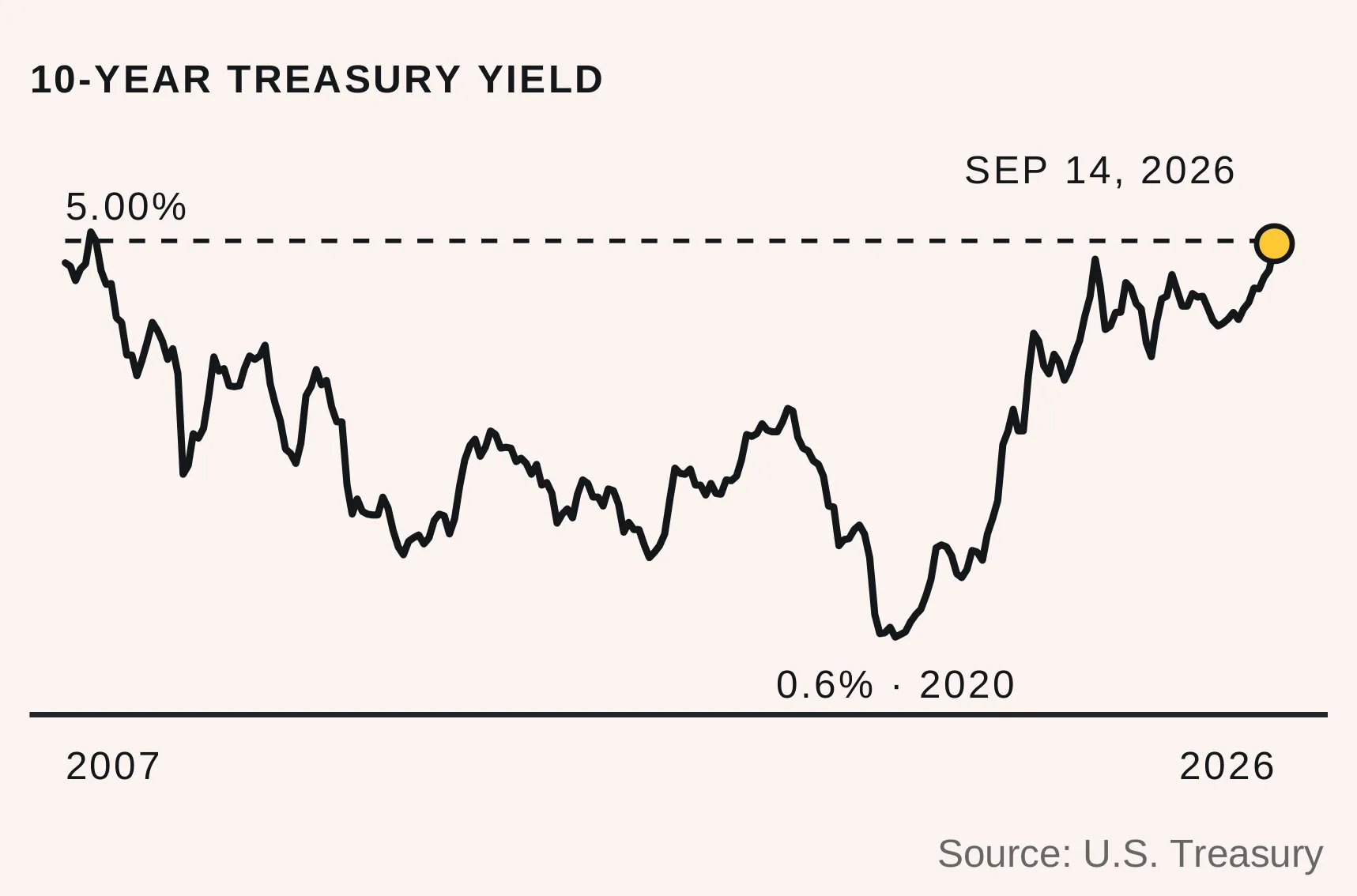
The 10-year Treasury yield has breached 5%, reaching its highest level since 2007. Federal debt exceeds $40 trillion, and higher borrowing costs are putting further pressure on an already strained fiscal outlook.
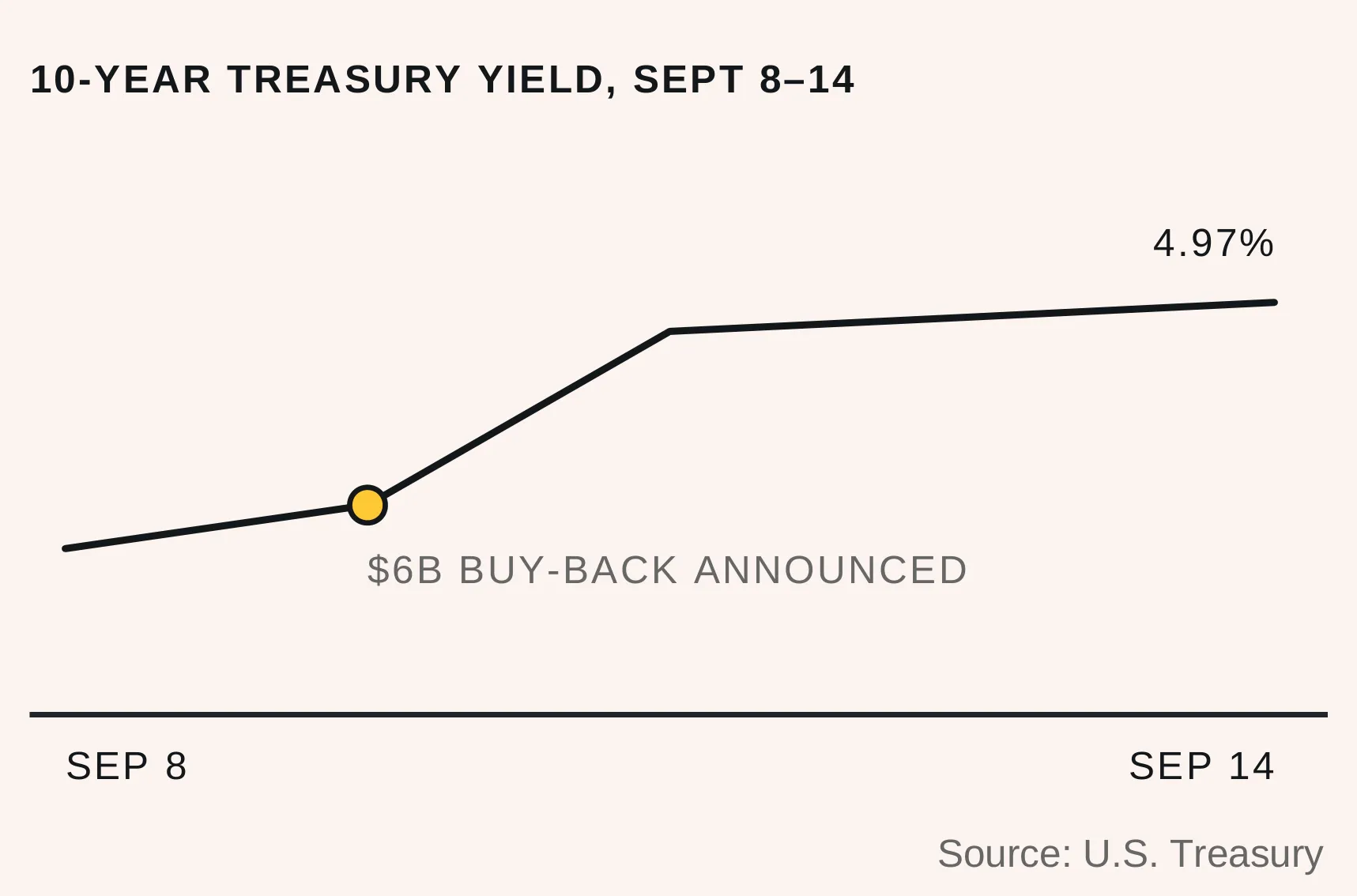
Underlying inflation is picking up, too. Core consumer prices rose 0.3% in August, up from 0.2% in July. Meanwhile, Treasury Secretary Bessent’s expanded $6 billion buyback has offered little relief to bond markets.
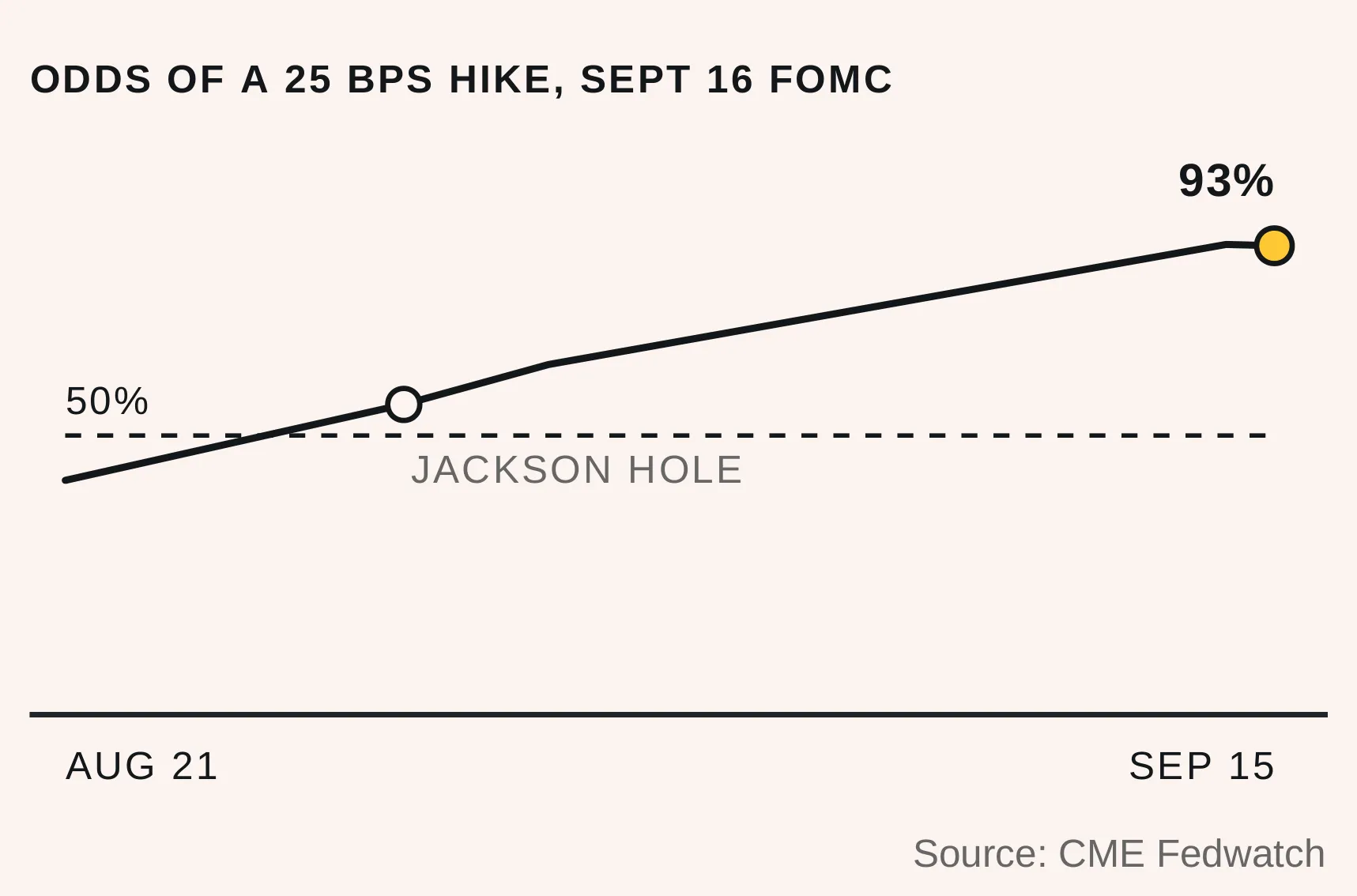
Markets now price in a greater than 90% chance of a quarter-point rate hike. Warsh faces an uncomfortable choice: hold rates steady and risk disappointing markets and undermining Fed credibility, or raise rates and risk confrontation with a president demanding lower borrowing costs.
What it means for banks and credit unions
For banks and credit unions, the implication is clear: prepare for higher risk premiums and continued volatility. Understand how different rate paths affect your funding costs, asset values, liquidity and earnings—and where your balance sheet is most exposed.
How prepared is your institution? Contact Delfi for a free consultation on optimizing your balance sheet.