
3 Challenges Keeping Your CFO Up at Night
We asked dozens of bank and credit union finance leaders about their top challenges. Slow insights, thin teams, and navigating capital markets topped the list.
By George Gao, VP of Operations··4 min read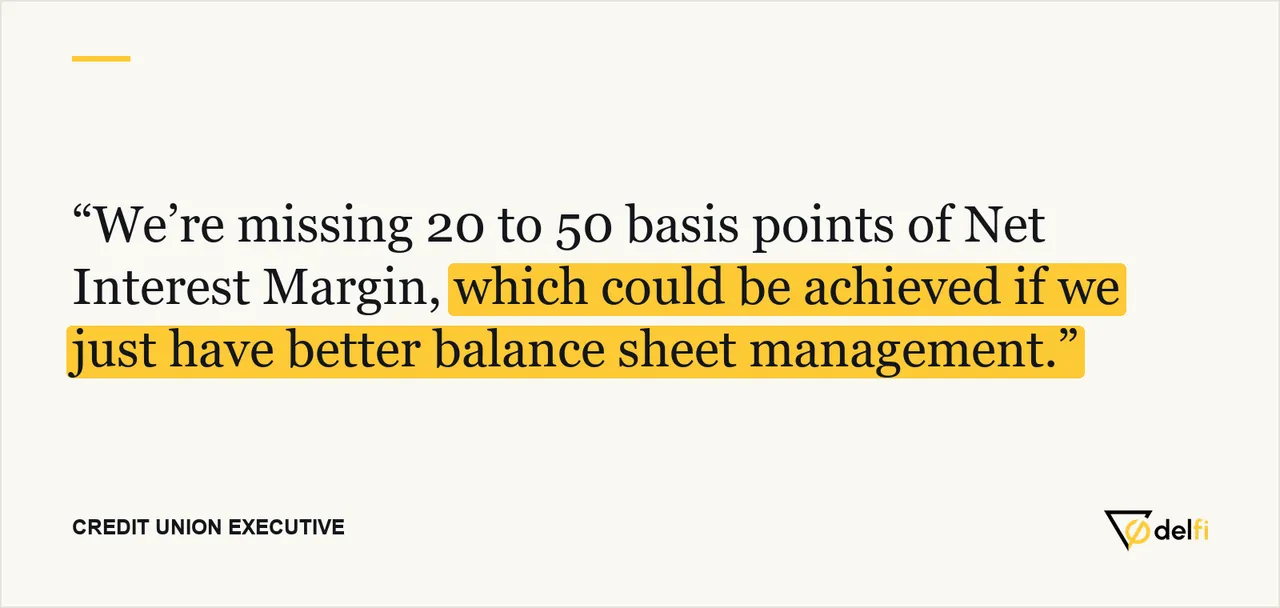
Managing a balance sheet is one of the most financially technical, mathematically complex, and high-stakes responsibilities for any bank or credit union CFO. Make one wrong decision, and your institution can collapse. Be overly cautious, and you leave significant income on the table.
We’ve spoken with dozens of banks and credit unions about the challenges they face with financial risk management and balance sheet optimization. Here are 3 of their top pain points:
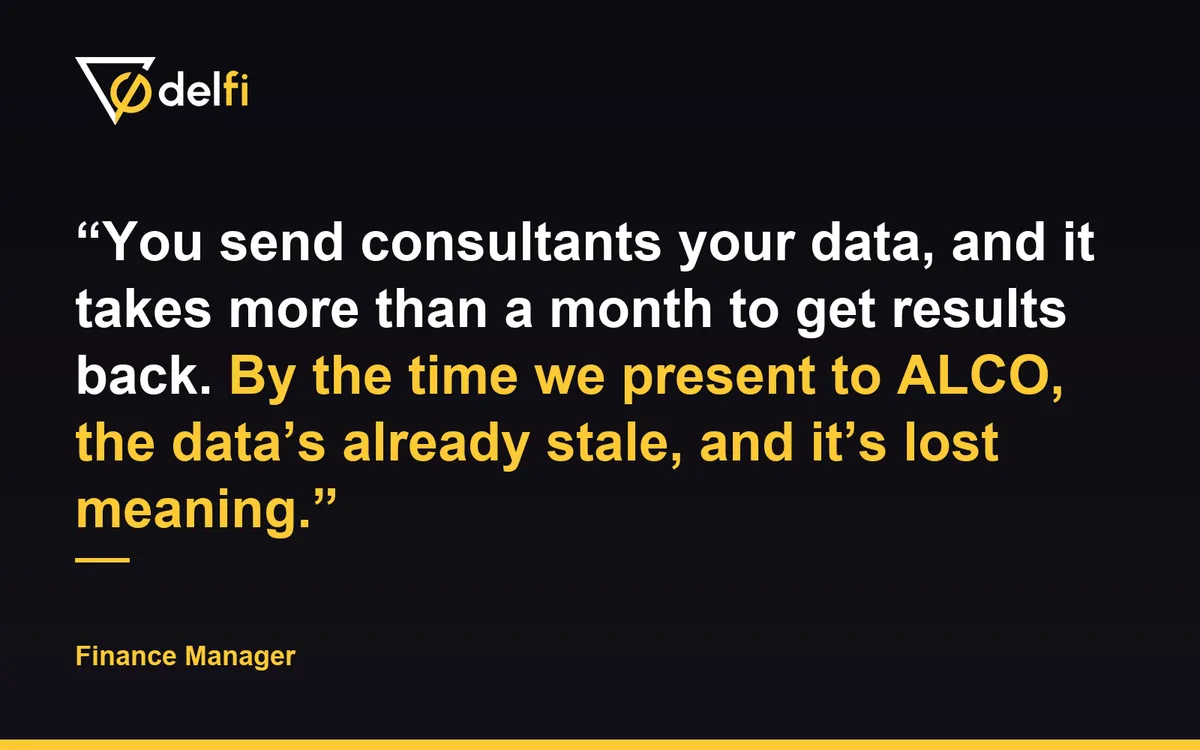
1. Balance sheet insights arrive slowly and are outdated quickly
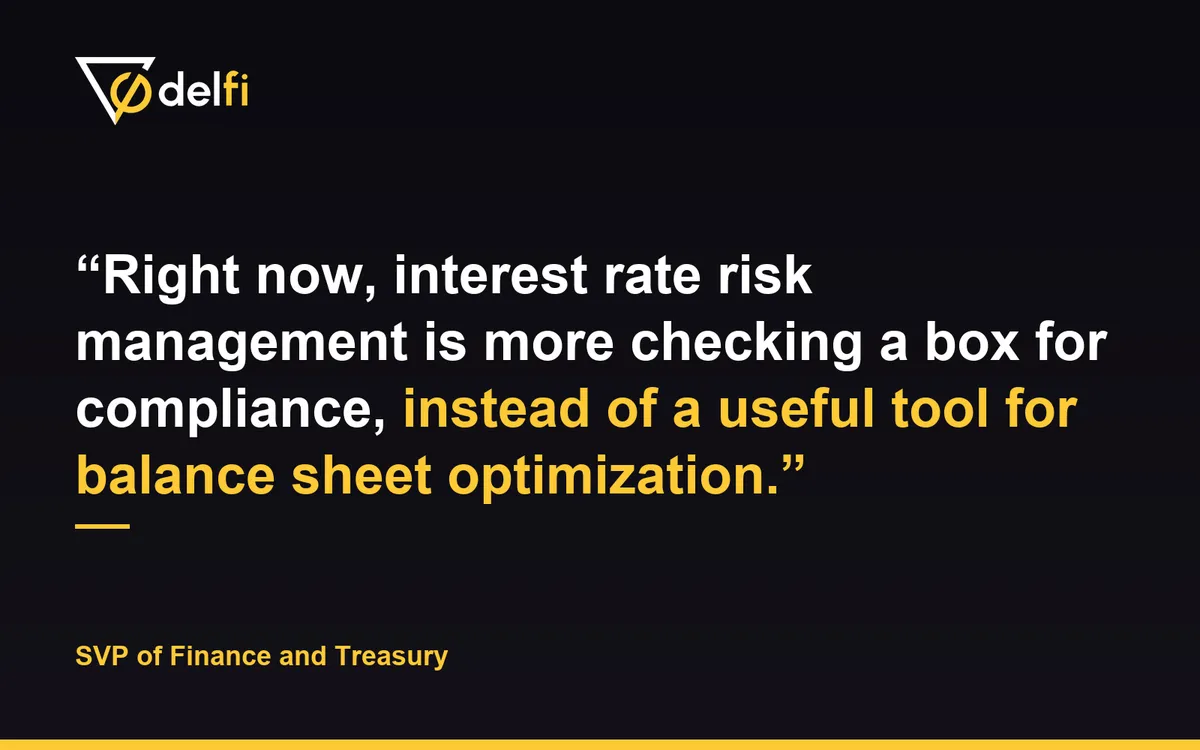
Too often, producing ALM risk reports is just a “check-the-box” exercise, used to present a pretty façade to regulators rather than to inform real-time, strategic decision-making.
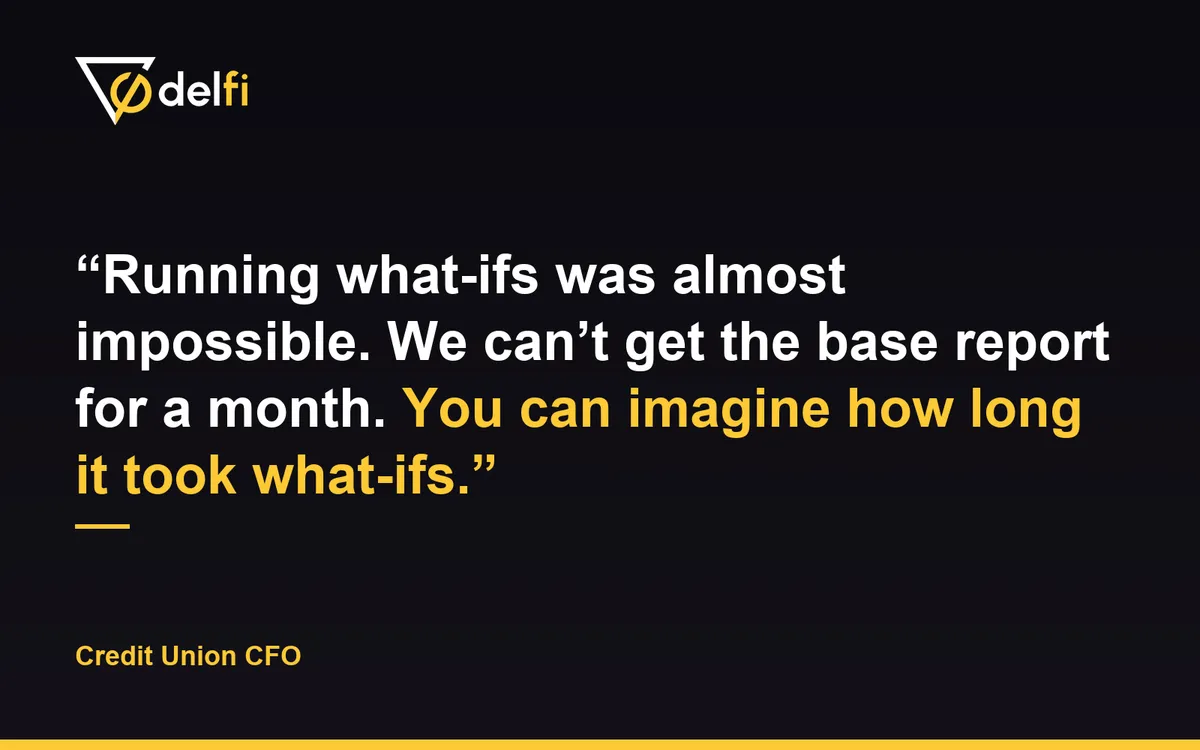
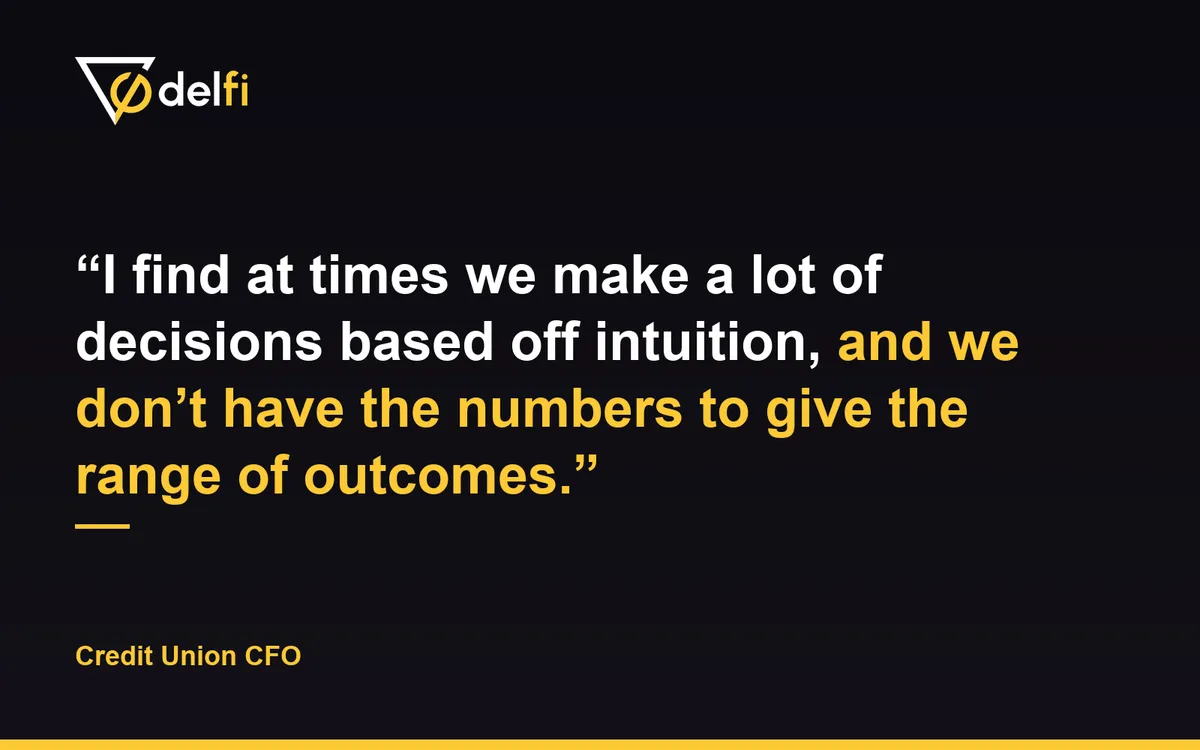
This is because balance sheet consultants take weeks to respond to CFO questions. They produce ALM risk reports that act more as backward-looking, quarterly autopsies. Many forward-looking scenarios built on top become quickly outdated.
About half (50%) of the finance teams we spoke with said that their outsourced ALM process was slow, with answers arriving too late, and 47% said that their balance sheet analysis was too static to enable relevant what-if analyses.
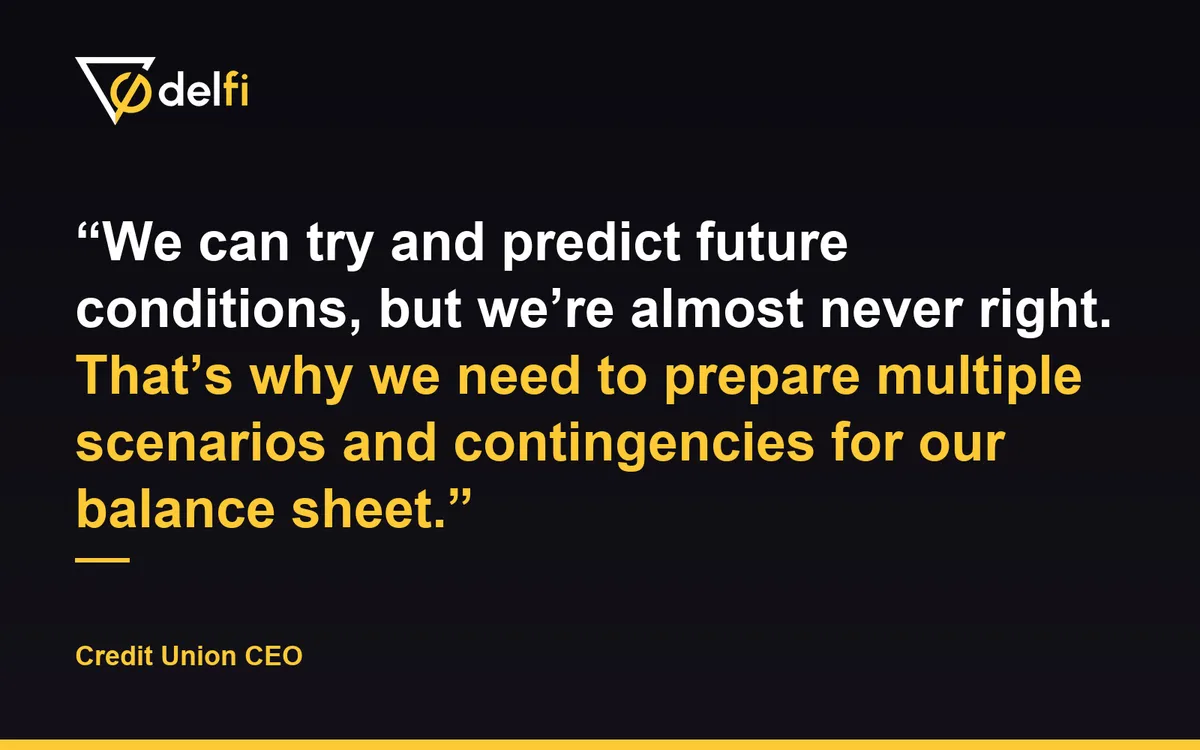
In today’s macro environment—with interest rate volatility, persistent inflation, and political instability—timely balance sheet insights are more important than ever, with CFOs needing to prepare multiple scenarios to respond to real-time risk signals.
2. CFOs don’t have enough resources to dedicate toward balance sheet management
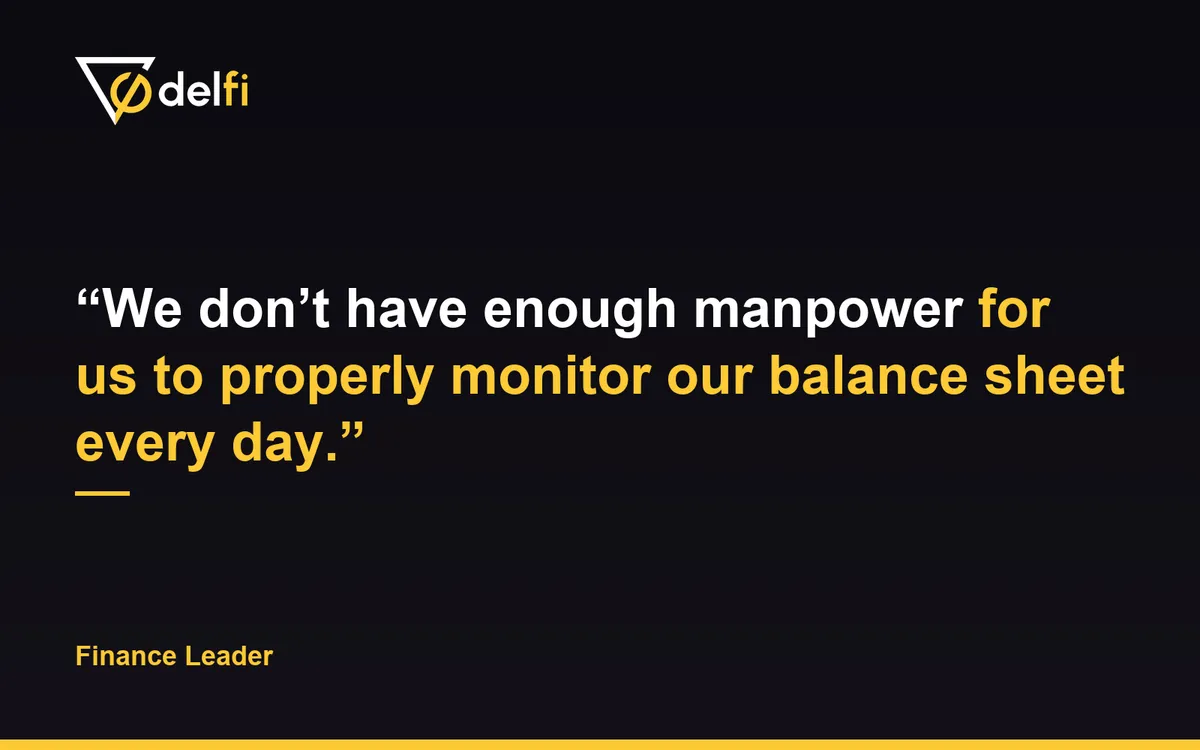
Smaller institutions have short-staffed finance teams, with just one or two people overseeing the entire function. Nearly four-in-ten (37%) bank and credit union finance teams we spoke with said they do not have the people, expertise, or resources that they need to properly manage their balance sheets in-house.
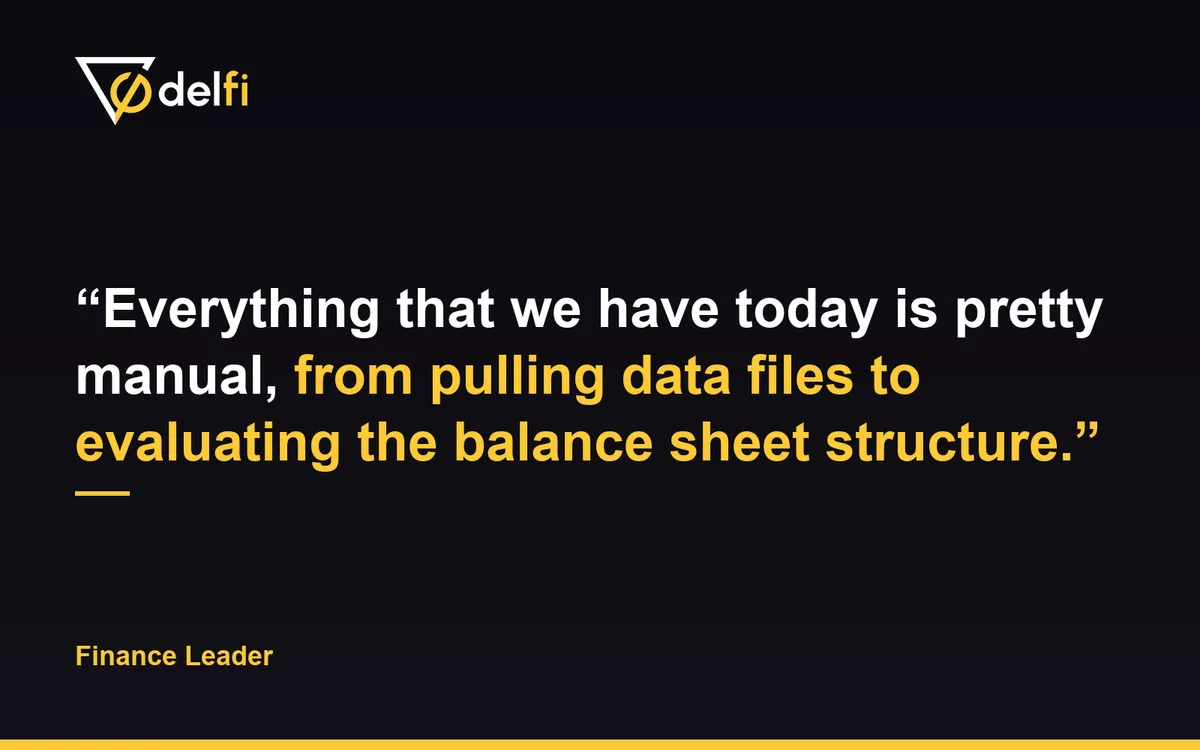
Larger institutions with in-house balance sheet management teams rely on Excel spreadsheets and siloed databases, which drains their time. Another one-third (33%) of institutions said that their work is labor-intensive and inefficient, relying on spreadsheets and manual data pulls.
While most institutions want to optimize their balance sheet, many just don’t have the capacity to do it.

3. Finance teams need help navigating capital markets
Traditionally, community banks and credit unions rely on third-party broker-dealers to help them navigate capital markets.
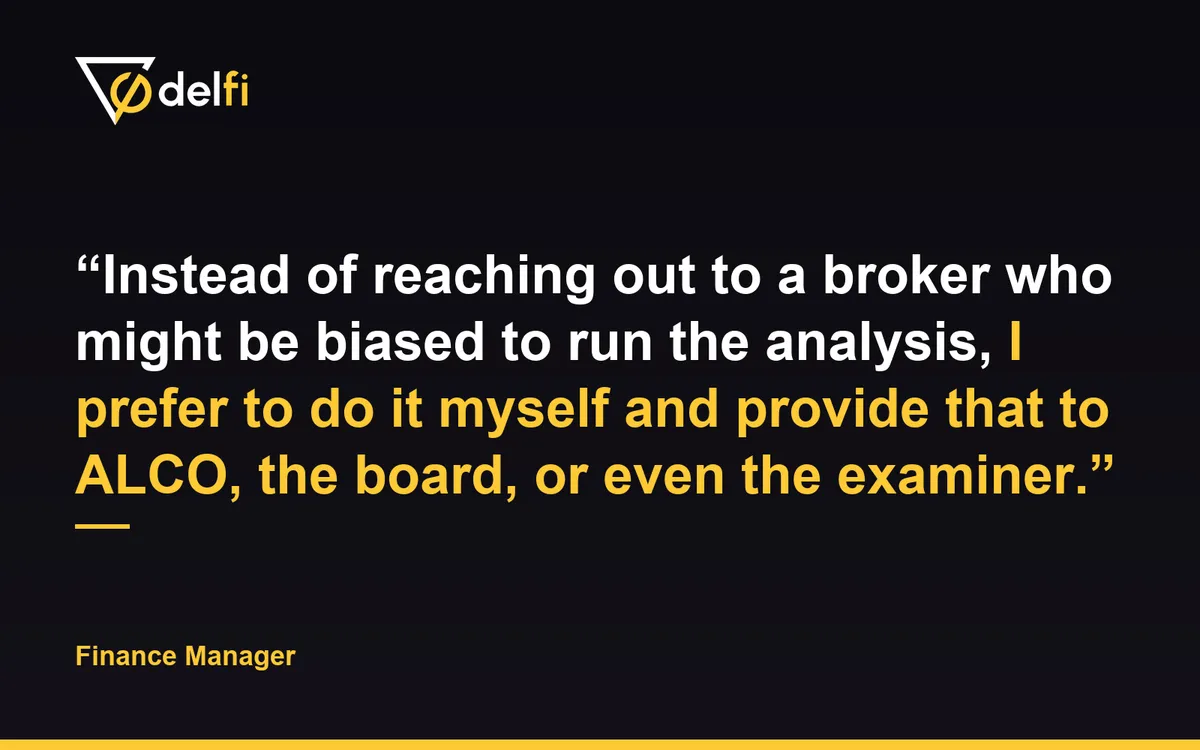
But broker-dealers are biased, more focused on selling their inventory than providing proper recommendations that fit each bank or credit union’s unique needs.
Often, the analytics to inform capital transactions are not available. For example, 27% of finance teams we spoke with said that it’s hard to find and vet good loan participations.
About four in ten (37%) finance teams also said that their NIM and ROA are stuck, with their board and regulators paying close attention. Many of these institutions have not taken advantage of capital markets to help them unlock growth.


Do these challenges resonate with you? Contact Delfi for a free consultation to optimize your balance sheet.
Note on methodology: These anonymized insights are based on more than 70 unstructured conversations between Delfi and bank and credit union finance leaders. Pain points were raised by the finance leaders themselves when asked what their top challenges were. Quotes were modified for clarity, with meaning and intent preserved.
Frequently asked questions
Who did Delfi talk to for this article?
Finance teams and C-suite leaders at dozens of banks and credit unions. Quotes are anonymized and modified for clarity, with meaning and intent preserved.
What is the biggest balance sheet pain point for bank and credit union CFOs?
Slow, outdated insight. Outsourced ALM reports take weeks or months to come back, so they are stale by the time the board or ALCO sees them, and any what-if analysis built on them is quickly irrelevant.
How does Delfi help with these pain points?
Delfi runs the balance sheet analysis the same day it is asked for, lets the finance team test strategies themselves, and gives an unbiased view of how a security, loan, or hedge would affect the whole balance sheet. Email contact@delfi.co for a free consultation.